Bahan Aviation Services logo

Sample Aircraft Pre-Purchase Inspection Report

A real Piper Arrow pre-buy report (registration removed) showing exactly how findings are documented.

Call (281) 451-2163 Send aircraft details

Piper Arrow pre-purchase inspection

When you’re considering an aircraft, a clear inspection report helps you understand the findings and decide what to ask before completing the purchase. This sample shows how Bahan Aviation Services documents observations during a pre-purchase inspection.

The sample is based on a Piper Arrow (PA-28R) inspection. The registration has been removed for privacy. Photos sit next to the related findings, with an explanation of why each item may matter and recommended follow-up for the buyer to consider.

Read the report on this page Download the PDF

What you’ll see in the report

  • Clear descriptions of observed conditions
  • Photos that support and illustrate each finding
  • Why a finding may be important
  • Suggested follow-up to plan next steps

Inside the report: 1973 Piper Arrow

Aircraft1973 Piper Arrow (PA-28R), registration removed
InspectionAugust 2026
InspectorChristopher James Bahan, A&P/IA, Bahan Aviation Services
PurposePre-purchase condition evaluation for the prospective purchaser

Executive summary

The inspection disclosed a combination of engine-condition indications, cooling-air-management deficiencies, deferred maintenance, and inspection/record concerns. Of greatest significance is the engine cooling configuration and its observed condition. The LoPresti composite cowling installation uses portions of the available inlet air for the oil cooler and engine induction system. The remaining cooling air must be captured, sealed above the engine, and forced through the cylinder and cylinder-head cooling fins by a pressure differential. The observed baffle arrangement, small or ineffective aft pieces, substantial front-seal distortion, and visible escape paths reduce that pressure differential and permit air to bypass the cylinders.

With less mass airflow passing through the cylinder fins, the cylinders reject less combustion heat. The air that does not pass through the fins cannot provide effective cylinder cooling merely by moving across the top of the engine. This condition is consistent with the reported history of persistently high cylinder-head temperature (CHT) and oil temperature. Prolonged operation under those elevated-temperature conditions accelerates thermal aging of the cylinders, pistons, rings, valve components, and lubricating oil. In this aircraft, the heat history and observed blow-by indications are consistent with premature loss of ring sealing and cylinder deterioration. The combination warrants correction and an instrumented operational evaluation before the aircraft is accepted or returned to routine service.

Purchase concern: The present information does not establish the internal condition or remaining service life of the engine. The cooling system should be restored to approved configuration and verified under controlled operating conditions; cylinder condition and ring sealing require further evaluation.

Why the engine will run hot when cylinder-cooling air is lost

Normal pressure-cooling process

A tightly cowled, air-cooled engine does not cool adequately simply because outside air enters the cowling. The inlet and baffle system creates a high-pressure region above the cylinders. Lower pressure below and aft of the engine provides the driving force that moves air down through the narrow passages between the cylinder-head and barrel fins. Heat transfers from the metal fins into that moving air and is carried overboard.

Effect of diverted and bypassed airflow

Every branch supplied from the inlet/plenum, including an oil-cooler duct or an induction-air inlet, consumes part of the available airflow and pressure capacity. An approved cowling system is designed to accommodate those branches when installed exactly as approved. However, the margin depends on tight baffle seals, correct duct geometry, adequate inlet and outlet area, and an unobstructed flow path through the cylinder fins.

When seals curl inward, aft baffles do not contain the upper plenum, or large gaps allow air to escape, air follows the path of least resistance. It travels around the cylinder assemblies or over the top of the engine instead of being forced through the high-resistance fin passages. The result is reduced cooling-air mass flow through the areas that need it most. CHT rises first because combustion heat is concentrated in the cylinder heads. Oil temperature can then rise because the oil absorbs additional heat from pistons, cylinder walls, heads, and the crankcase, while oil-cooler performance may also be limited by duct loss, leakage, or a restricted/collapsed duct.

Compounding factors noted or reported

  • A partially collapsed oil-cooler SCAT duct can reduce the volume and pressure of air reaching the cooler.
  • A small cowl-flap outlet or a cowl flap that must remain open reduces cooling reserve and indicates that exit-area management is critical.
  • Induction air drawn from a hot upper-cowl region can reduce charge density and available power compared with properly supplied outside/ram air; any such condition must be checked against the approved installation.
  • The installed electronic ignition changes timing in operation. It begins from the approved base/static timing and can command additional advance under cruise-type combinations of engine speed and manifold pressure. Advancing the spark can improve efficiency and power, but it can also move peak cylinder pressure earlier and increase cylinder-head heat loading. In an engine already deprived of cooling airflow, that added heat compounds the thermal stress on the cylinders, rings, pistons, valves, and oil.
  • Ring blow-by increases crankcase heat and contamination and may contribute to dark oil, oil discharge, and a wet belly, but these signs require testing before assigning a cause.

Effect of prolonged high-temperature operation on cylinder life

Continued operation with high CHT and high oil temperature does more than produce a temporary gauge indication. Excess cylinder-head temperature reduces the strength and dimensional stability of aluminum cylinder heads, increases thermal expansion and distortion, and raises the temperature of pistons, rings, valve guides, and lubricating oil. Elevated oil temperature reduces oil viscosity and accelerates oxidation, deposit formation, and loss of lubricating protection. At the piston and ring belt, excess heat can reduce oil-film strength, promote deposits and ring sticking, increase scuffing and wear, and degrade the rings' ability to seal combustion pressure.

Once ring sealing deteriorates, combustion gases escape past the pistons into the crankcase. This blow-by further heats and contaminates the oil, increases crankcase pressure, and can contribute to dark oil, oil discharge from the breather, and a wet belly. The process can become self-reinforcing: inadequate cooling produces heat; heat accelerates ring and cylinder wear; increased blow-by adds further heat and contamination. Based on the reported prolonged high CHT/oil-temperature operation together with the observed blow-by evidence, the cylinders should be regarded as prematurely heat-aged with probable ring-sealing deterioration unless detailed testing demonstrates otherwise.
Detailed findings

Each finding records what was observed or reported, why it matters to a buyer, and how it was classified. Open any finding to read it in full, exactly as written in the report.

1. Cooling-air leakage and ineffective baffling

Safety-of-flight / airworthiness evaluation required

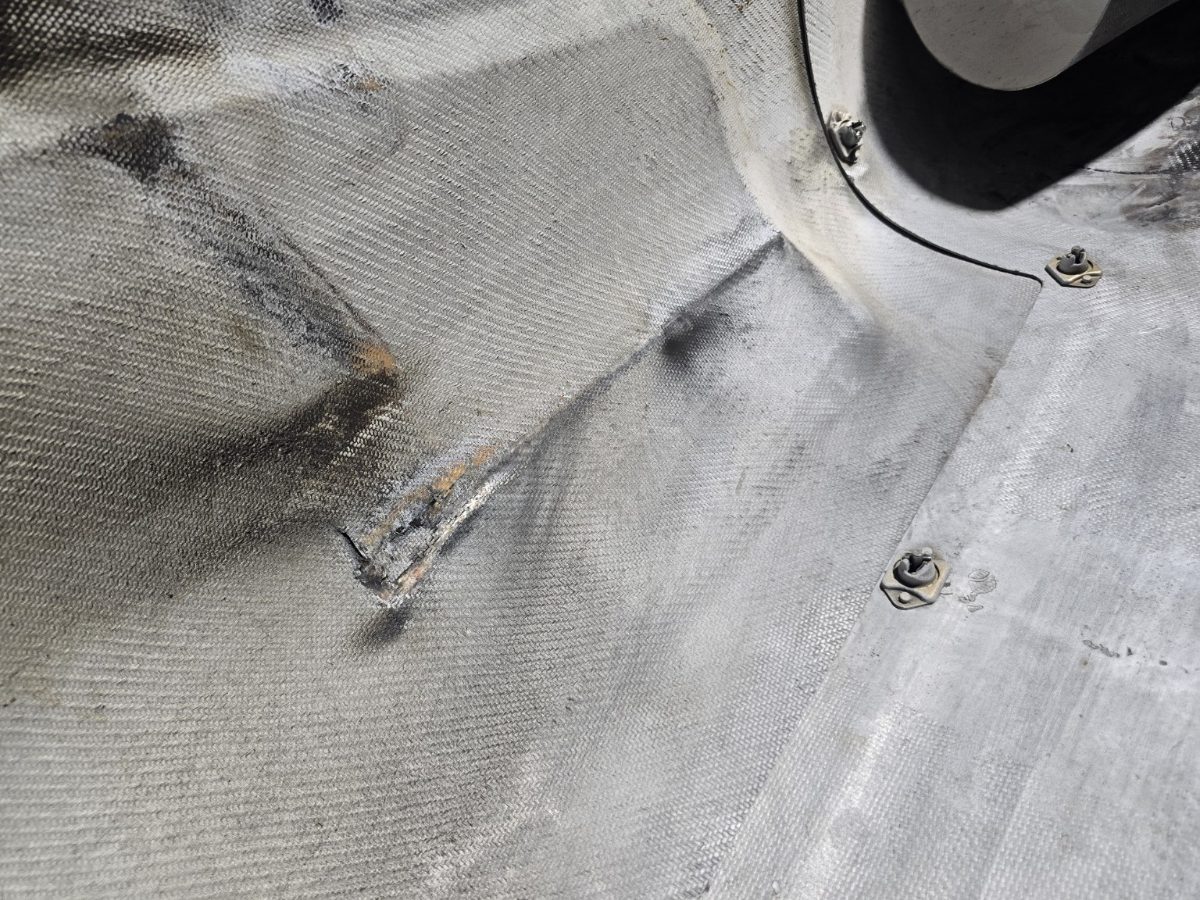
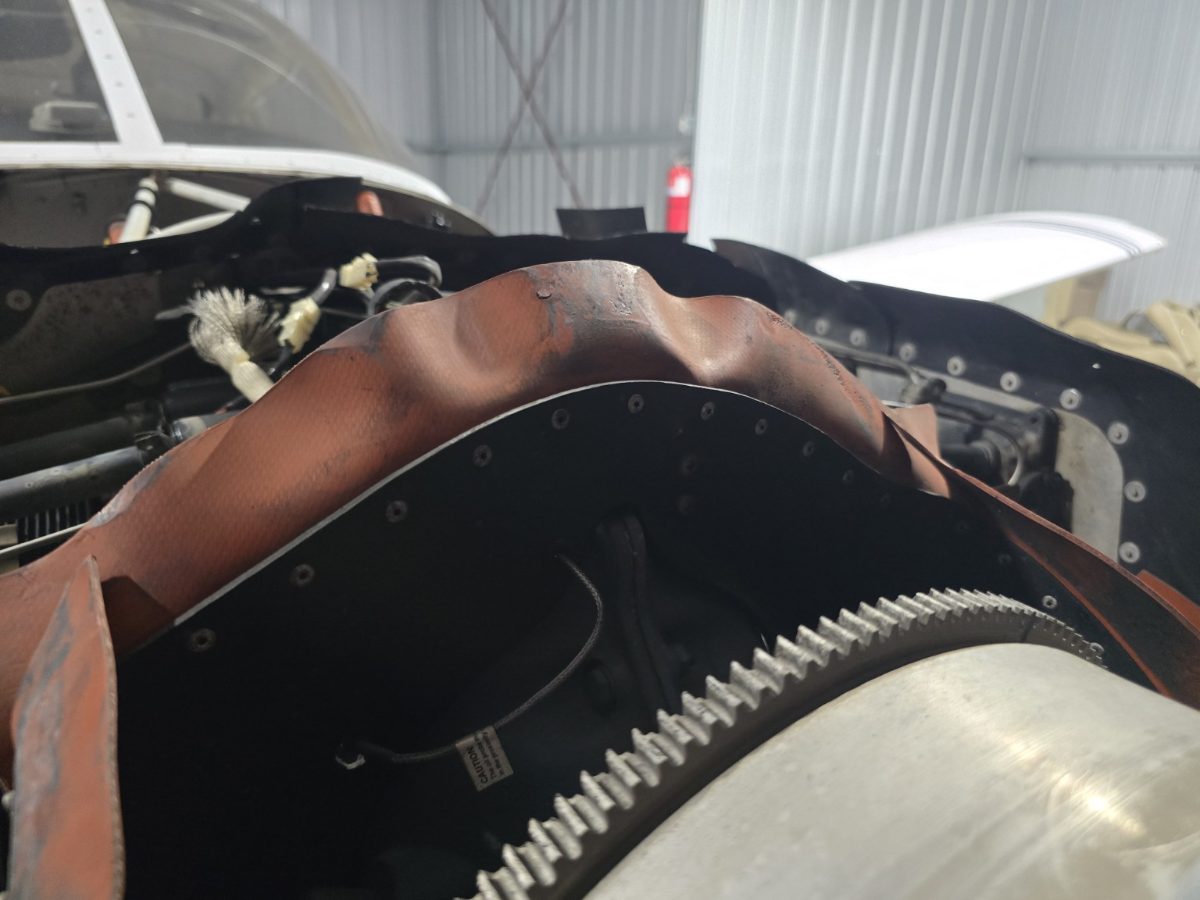
The front baffle seal was badly wrinkled and the small aft baffles didn't contain the air above the engine, so cooling air could escape around the cylinders instead of being forced through the fins. That's a direct, credible explanation for the persistently high CHT.

Read the full finding

Observed/Reported: The engine baffling included small aft pieces that appeared ineffective in containing upper-plenum air. The forward baffle/seal area showed large wrinkles and visible paths where air could escape. Airflow appeared able to pass over or around the cylinders rather than being directed down through the fins.

Why it matters: Leakage reduces upper-deck pressure and the pressure differential across the cylinders. Because the fin passages are restrictive, even relatively small bypass paths can carry a disproportionate amount of air away from the cooling surfaces. This provides a direct, technically credible explanation for persistently high CHT.

Severely wrinkled and folded front baffle seal on a Piper Arrow engine
Figure 1: The front baffle seal is severely wrinkled, folded and out of position, leaving gaps that let cooling air bypass the cylinders.
Dark airflow and contact marks inside the upper cowling showing cooling air escaping past the baffling
Figure 2: Dark airflow and contact marks inside the upper cowling show cooling air escaping past the baffling.

2. Cooling-air allocation under the LoPresti cowling

Conformity and functional verification required

One side of the inlet feeds the oil cooler and the other feeds engine induction air, leaving the rest for cylinder cooling. With the leakage observed, the remaining air may not build enough pressure to push through the cylinder fins.

Read the full finding

Observed/Reported: One inlet-side airflow path supplies the oil cooler and the opposite side supplies engine induction air, leaving the balance of inlet flow available for cylinder cooling. Minimal effective inlet air and substantial leakage were noted in the installed condition.

Why it matters: The branches are not inherently unairworthy if they conform to the approved STC installation. The concern is that the observed leakage and apparent lack of effective air containment may prevent the remaining airflow from developing the pressure and mass flow required through the cylinder fins.

3. Electronic-ignition advance adds heat loading

Material engine-operating and conformity concern

The electronic ignition advances timing in cruise. That's normal for the system, but extra combustion heat on top of poor cooling airflow speeds up oil breakdown and cylinder wear.

Read the full finding

Observed/Reported: The engine is equipped with an electronic ignition/magneto that does not remain at the placarded base timing throughout operation. Its programmed schedule advances ignition under cruise-type operating conditions to improve combustion efficiency and power.

Why it matters: Ignition advance initiates combustion earlier so peak cylinder pressure occurs earlier in the power stroke. Depending on mixture, manifold pressure, engine speed, and the particular advance schedule, this can increase CHT and thermal loading. The system may be approved and operating as designed; the concern is the cumulative effect when the added combustion heat is paired with inadequate cooling-air mass flow through the cylinder fins. Repeated operation under that combined condition accelerates oil degradation and thermal aging of the cylinder heads, pistons, rings, valve guides, and cylinder walls, and is consistent with the observed loss of ring sealing and blow-by. The exact ignition model, approved timing curve, base timing, manifold-pressure input, and installation conformity must be verified from the STC/installation data.

4. Reported chronically high CHT and oil temperature

Material operational and purchase concern

The owner reported high CHT and oil temperatures in normal operation, managed by pilot technique. That hides the problem rather than fixing it, and leaves little margin for climbs or hot days.

Read the full finding

Observed/Reported: The owner/operator reportedly experiences high CHT and oil temperature during normal operation and avoids high-temperature operation by pilot technique.

Why it matters: A recurring temperature problem is evidence that the cooling system, engine condition, engine setup, instrumentation, or operating combination requires diagnosis. Pilot management does not correct the underlying cause or establish adequate cooling margin for climb, high ambient temperature, or other demanding conditions.

5. Partially collapsed oil-cooler duct

Airworthiness evaluation required

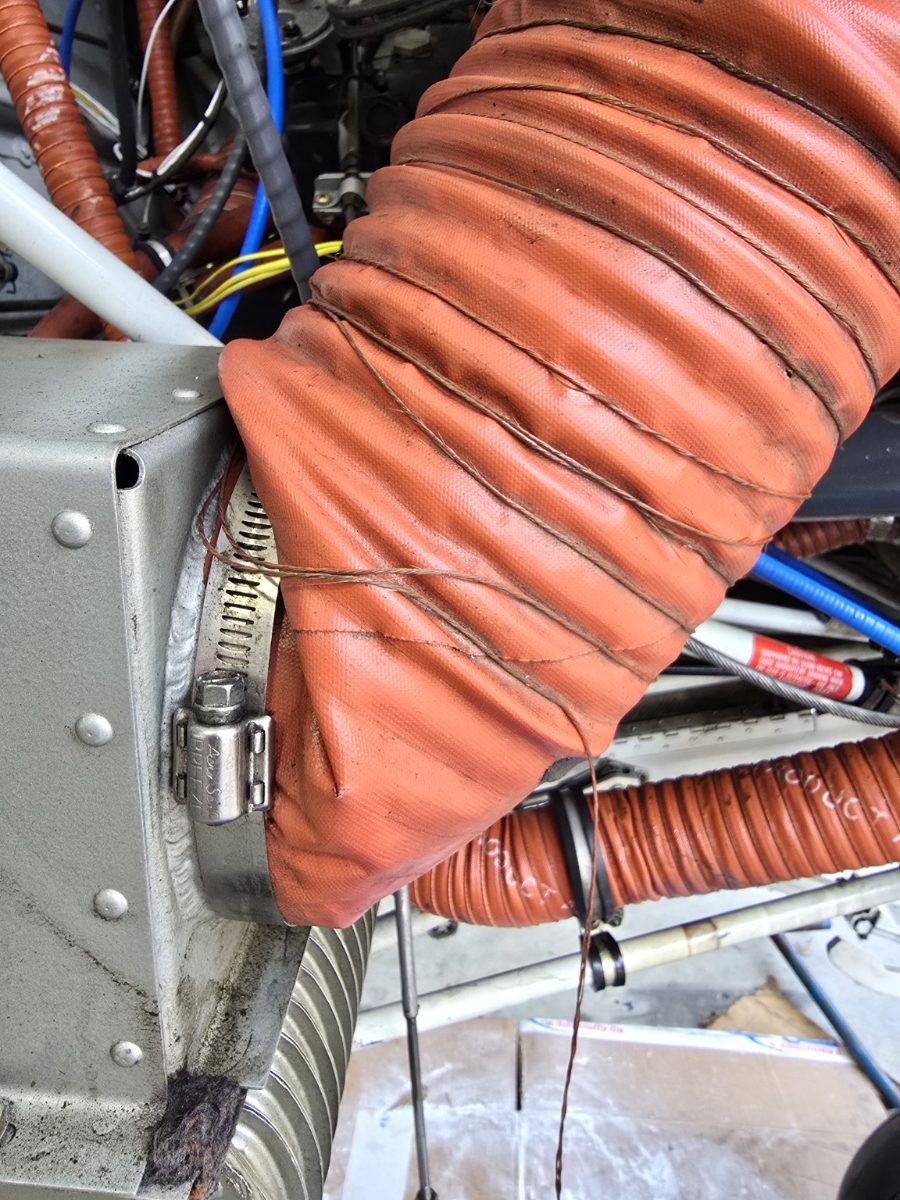
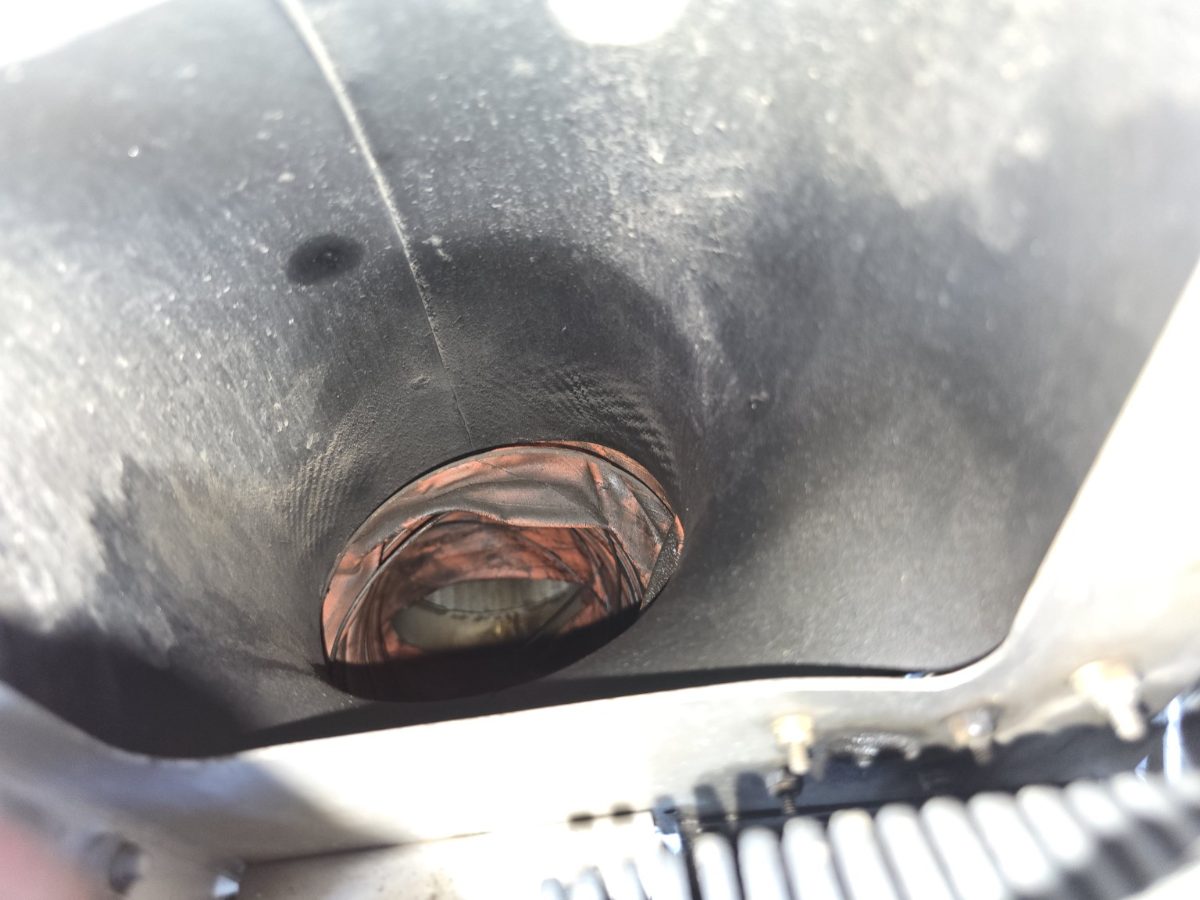
The oil-cooler SCAT duct was partly collapsed, restricting airflow to the cooler. That can raise oil temperature even when the cooler itself is fine.

Read the full finding

Observed/Reported: The oil-cooler SCAT duct was observed partially collapsed.

Why it matters: Reduced duct cross-section increases restriction and can lower cooler airflow. That can raise oil temperature even when the cooler itself is serviceable. Duct condition, routing, support, internal integrity, and conformity should be corrected and verified.

Collapsed orange oil-cooler SCAT hose near its attachment to the oil cooler
Figure 3: The oil-cooler air duct is badly deformed and collapsed near the cooler, restricting cooling airflow.
View through the cowling connection showing the collapsed oil-cooler air hose
Figure 4: The view through the cowling connection confirms the hose is collapsed and substantially restricted.

6. Ring blow-by and oil-condition indications

Engine-condition evaluation required

Air at the oil-filler tube, dark oil and a wet belly point to blow-by. With the engine's heat history, that's consistent with premature ring and cylinder wear, but it needs testing to confirm.

Read the full finding

Observed/Reported: Blow-by was indicated by air at the oil-filler tube, dark/black oil, and a wet belly. These signs are not, by themselves, a quantified diagnosis.

Why it matters: In the context of prolonged high CHT and oil-temperature operation, these findings are consistent with premature heat-related cylinder aging and loss of ring sealing. Excess heat reduces lubrication margin, accelerates oil oxidation and deposits, and can promote ring sticking, scuffing, wear, and cylinder-wall glazing or damage. The resulting blow-by pressurizes the crankcase, contaminates and further heats the oil, and can increase oil consumption or discharge. A differential compression test, borescope inspection, crankcase-breather inspection, oil-consumption review, and oil-filter/screen inspection remain necessary to quantify severity and confirm the affected cylinders.

Video: Piper Arrow blow-by out the oil filler neck, found on a pre-buy.

7. Inconsistent differential-compression sealing

Material engine-condition concern

Compression eventually read in the mid-70s, but only after the cylinders first showed poor compression and the crankshaft had to be repositioned several times. A healthy cylinder seals consistently.

Read the full finding

Observed/Reported: A differential compression check ultimately produced readings in the mid-70s. The cylinders initially exhibited poor compression, however, and the crankshaft had to be repositioned multiple times with additional effort before the rings would seat and the higher readings could be obtained.

Why it matters: The final readings should be recorded, but they do not fully represent the observed behavior. A serviceable cylinder should provide reasonably repeatable sealing when the piston is correctly positioned at top dead center on the compression stroke. A substantial change after repeated rocking or repositioning can occur when rings momentarily reseat or move away from a worn, glazed, contaminated, or damaged area. In combination with the high-temperature history and blow-by evidence, the inconsistent results support suspected ring and cylinder-wall deterioration near the upper cylinder and normal top-dead-center ring-reversal area. Compression testing alone cannot establish the precise wear location; a borescope examination, repeat hot compression test, leakage-path identification, oil-consumption history, and cylinder dimensional inspection if removed are needed for confirmation.

8. Evidence of oil entering the cylinders

Material engine-condition concern / further diagnosis required

After a long ground run, substantial engine oil was found on the cylinder walls, piston crowns and spark plugs. That points to oil getting past the rings or valve guides.

Read the full finding

Observed/Reported: Following a prolonged engine ground run, substantial oil was observed on the cylinder walls, piston crowns, and spark plugs. The fluid present inside the cylinders was confirmed to be engine oil.

Why it matters: This amount of oil within the combustion chambers is abnormal and indicates excessive oil passing the piston rings and/or entering through the valve guides. When considered with the initial difficulty obtaining satisfactory compression readings, the repeated crankshaft repositioning required to seat the rings, and the engine's history of elevated cylinder-head and oil temperatures, these findings are consistent with accelerated cylinder, piston-ring, and/or valve-guide wear. Continued operation may result in excessive oil consumption, spark-plug fouling, reduced combustion efficiency, increased blow-by, further deterioration of cylinder condition, and possible loss of engine performance. Further cylinder evaluation is recommended before continued operation.

9. External engine oil leaks

Maintenance and airworthiness evaluation required

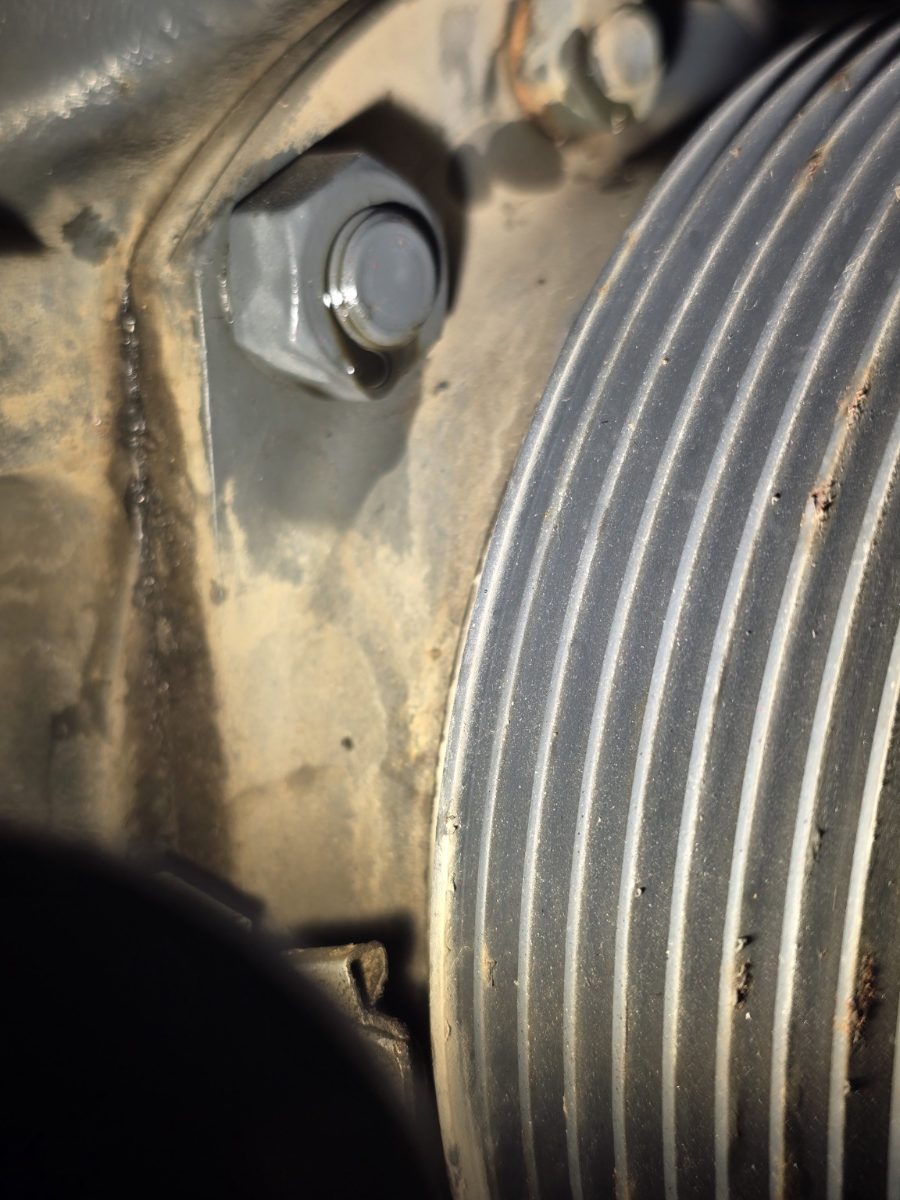
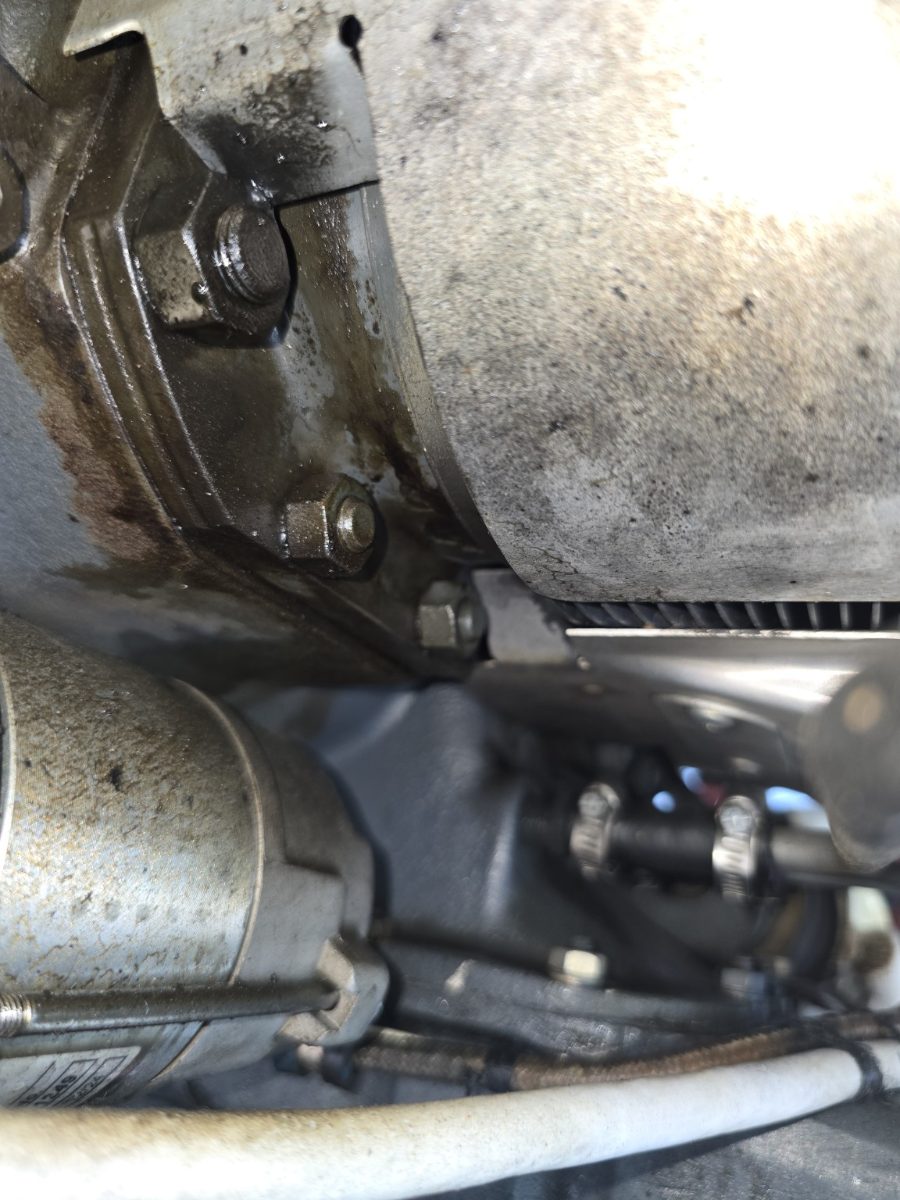
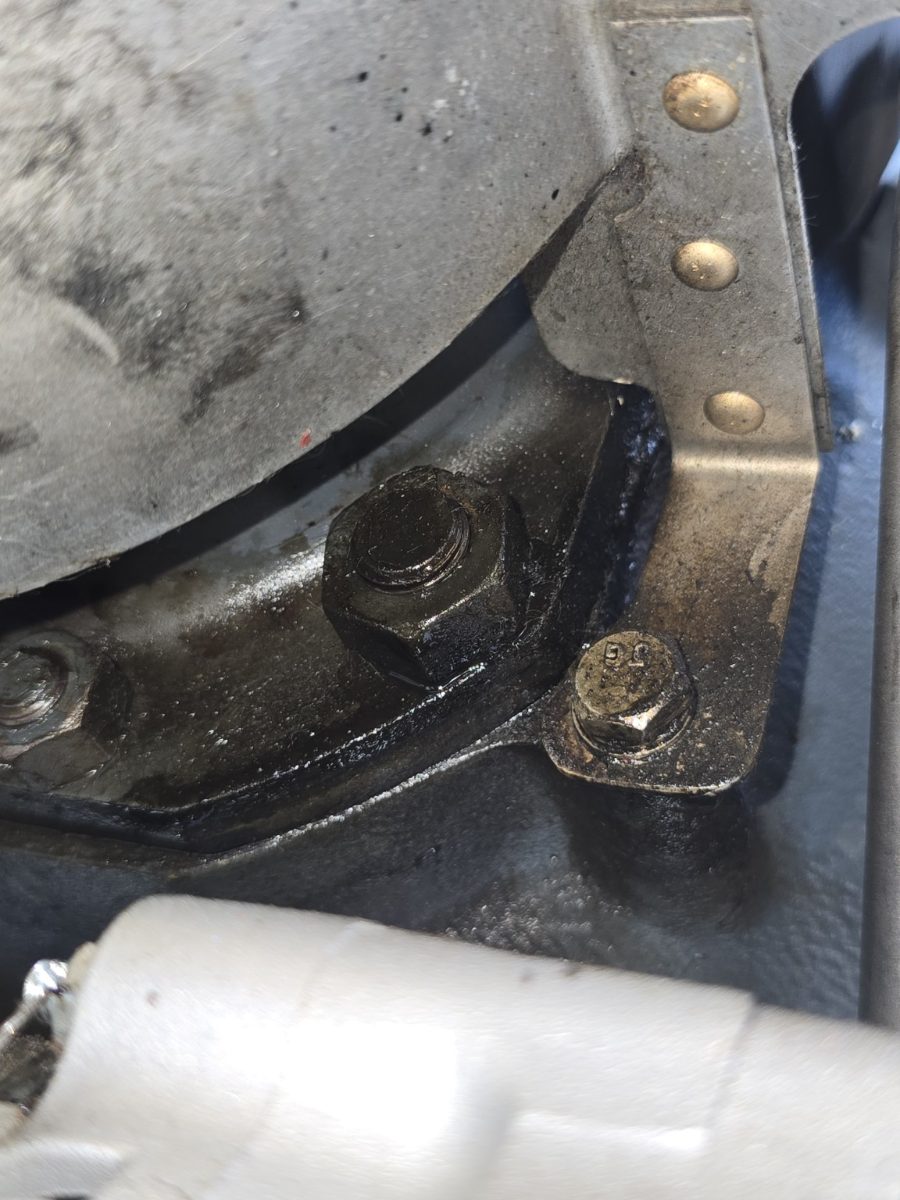
Oil was found on Cylinders 1, 2 and 3 after the ground run, including oil leaking up through the threads of a No. 2 cylinder hold-down nut. The heavy, baked-on residue points to long-standing leaks.

Read the full finding

Observed/Reported: Oil was observed on the exterior of the engine following the prolonged ground run. Cylinders Nos. 1 and 2 had oil present along their lower sides, while Cylinder No. 3 had oil present on the top of the cylinder. Cylinder No. 2 also exhibited oil leaking upward through the threads of a cylinder hold-down nut.

Why it matters: The location and extent of each leak should be further evaluated to determine its source. The engine should be thoroughly cleaned, operated, and reinspected to accurately identify the individual leak paths and determine the corrective action required.

Fresh oil around the No. 2 cylinder hold-down nut
Figure 7: Fresh oil around the No. 2 cylinder hold-down nut.
Oil leakage at the base of Cylinder No. 2 after cleaning and a ground run
Figure 9: After cleaning and a ground run, leakage was confirmed at the base of Cylinder No. 2.
Heavy oil saturation on the underside of Cylinder No. 1 and the adjacent crankcase
Figure 10: Heavy oil saturation under Cylinder No. 1, consistent with a long-standing leak.

10. Landing-gear unsafe warning light

Safety-of-flight / airworthiness concern

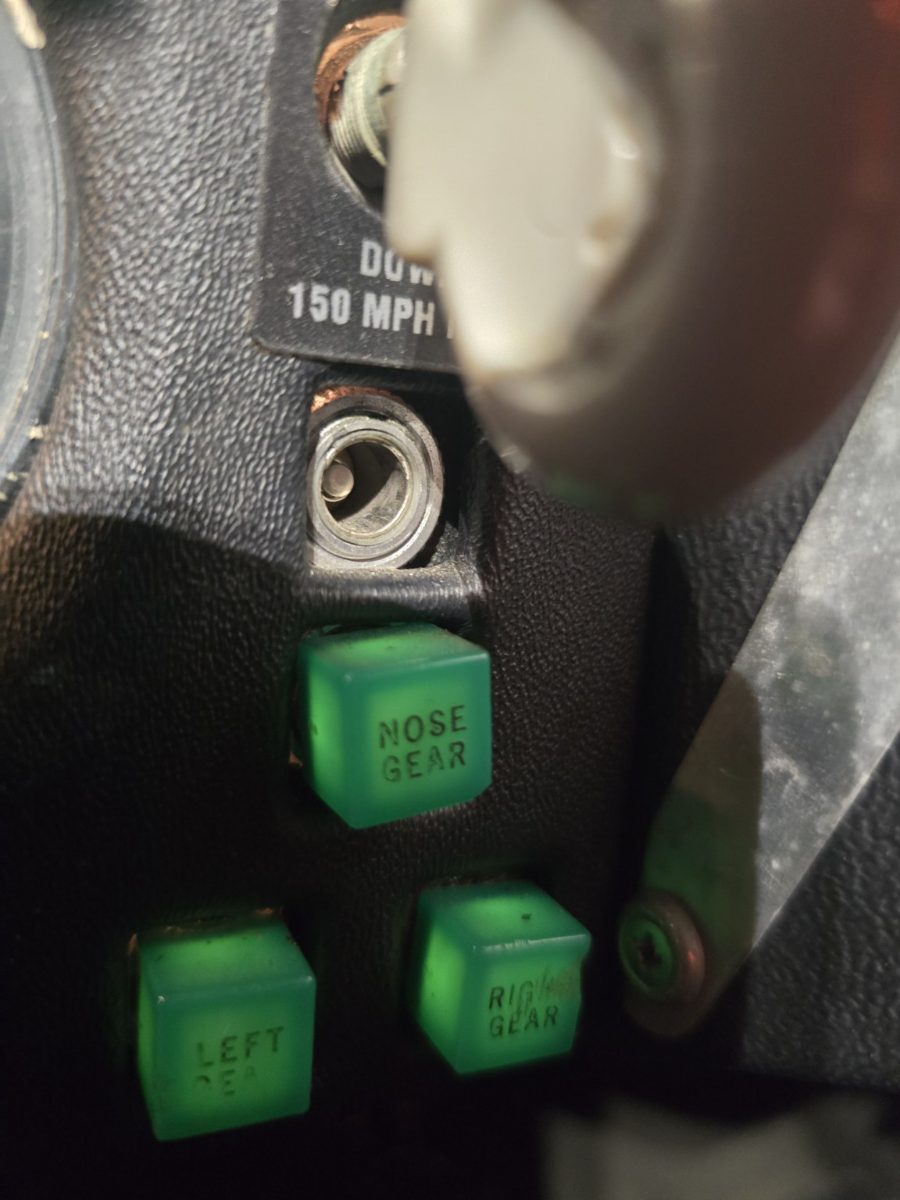
The gear unsafe warning light's housing and bulb were missing. This is a red flag, not a lighting squawk: the light may have been removed because it stayed on in flight, which would point to an underlying gear problem. The complete gear system should be inspected and tested before further flight.

Read the full finding

Observed/Reported: The landing-gear unsafe-warning-light receptacle remains installed; however, the light housing and bulb are missing. Consequently, the unsafe warning light cannot provide the pilot with its intended indication.

Why it matters: A missing unsafe light should not be treated as a simple lighting discrepancy. A common reason one gets removed is that it stayed illuminated or flickered in flight, and the bulb was pulled instead of finding the cause. That can hide a real problem, such as a misadjusted or failing limit or down-lock switch, gear not fully retracting or locking, worn rigging, or a hydraulic pump or pressure issue. Until the cause is known, assume the light may have been masking a fault. The complete landing-gear extension, retraction, warning and indication systems should be inspected, rigging-checked and operationally tested on jacks, the missing components restored, and the logbooks reviewed for related gear write-ups, all before further flight.

Empty receptacle where the landing-gear unsafe warning light should be, above three green gear-position lights
Figure 6: The unsafe warning light's lens and housing are missing; the three green gear-position lights remain.

11. Oil-change, oil-filter safety-wire and battery findings

Maintenance-condition and corrective-action concern

The oil-filter safety wire was loose and poorly installed, oil had been drained cold, and the battery couldn't start the engine without external power.

Read the full finding

Observed/Reported: Engine oil changes were reported as having been performed as pilot preventive maintenance. The oil-filter safety wire was observed excessively loose and installed in a manner that reduced its ability to resist filter loosening. It was also reported that the oil was drained while the engine was cold and that some used oil remained in the engine. The installed battery lacks sufficient capacity to start the engine, requiring an external power source for starting.

Why it matters: Preventive maintenance must comply with the applicable performance and return-to-service requirements, including 14 CFR 43.13. The oil-filter installation and safety wire should be corrected using acceptable methods and practices. Cold oil drains more slowly and may retain more used oil and settled material than oil drained after an appropriate warm-up. The oil-change procedure, filter installation, safety wiring, and battery condition should be corrected and evaluated before further operation.

12. Annual-inspection and maintenance-record discrepancies

Material airworthiness, inspection-scope and records concern

The factory CHT gauge was inoperative, the muffler shroud was loose and worn, an aftermarket fuel screen system was improperly installed with non-structural screws and leaking, and no current AD compliance list was found in the records.

Read the full finding

Observed/Reported: At the time of this pre-purchase inspection, the landing-gear unsafe-warning-light housing and bulb were missing, possibly removed to silence a persistent unsafe indication, preventing normal evaluation of that cockpit indication. The factory cylinder-head-temperature gauge was inoperative. It is a required engine instrument unless an approved primary replacement has been installed; the installed JPI monitor was not established by the available records as an approved primary replacement.

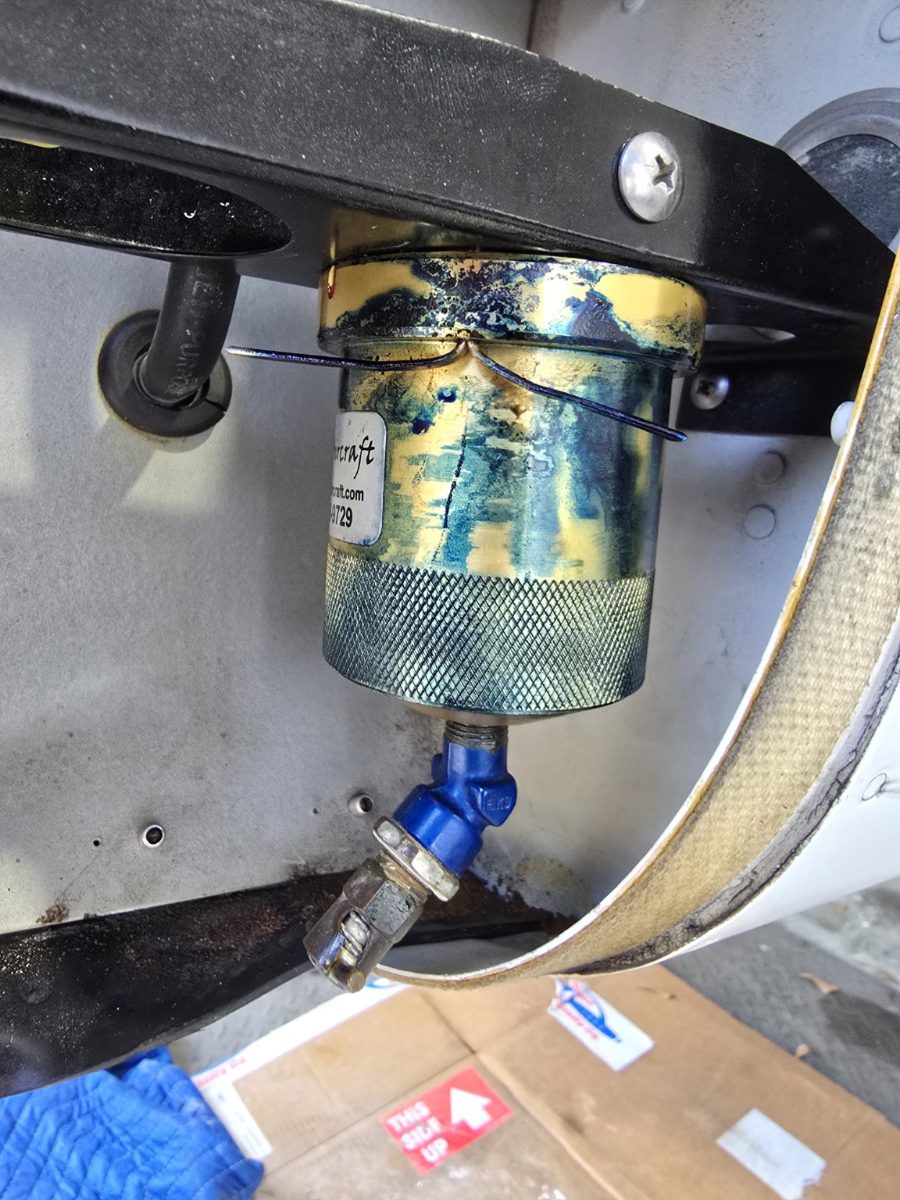
Additional findings: The muffler shroud was loose, and loose attachment screws had worn and damaged the shroud. Oil was present along the lower sides of Cylinders Nos. 1 and 2, and the lower front engine area exhibited extensive oil saturation. The oil-cooler SCAT hose was deteriorated and collapsed. An aftermarket fuel screen system was improperly installed, with its mounting bracket fastened by non-structural screws, and was leaking, leaving substantial blue fuel staining on the gascolator. The non-structural screws show the installation was done incorrectly and is not safe. These conditions require inspection and corrective action using the applicable approved data.

AD compliance: No current annual Airworthiness Directive compliance listing was generated or located with the records provided for review. The available documentation therefore did not establish that newly issued or revised ADs had been researched for the latest annual cycle or that continuing compliance status had been updated. A complete current AD review should cover the aircraft, engine, propeller, appliances, and installed equipment, with an updated compliance listing added to the permanent maintenance records.

Why it matters: The observed discrepancies affect the engine compartment, exhaust system, oil-cooler ducting, fuel system, required instrumentation, landing-gear warning system, and documented AD status. Each item should be inspected, operationally checked where applicable, corrected, and documented before the aircraft is accepted or returned to routine service.

Improperly installed aftermarket fuel screen with non-structural mounting screws and blue fuel staining on the gascolator bowl and seam
Figure 5: Aftermarket fuel screen system, improperly installed and leaking. The mounting bracket is fastened with non-structural screws, which shows the installation was done incorrectly and is not safe. Blue fuel staining on the gascolator bowl and seam indicates a current, active fuel leak.
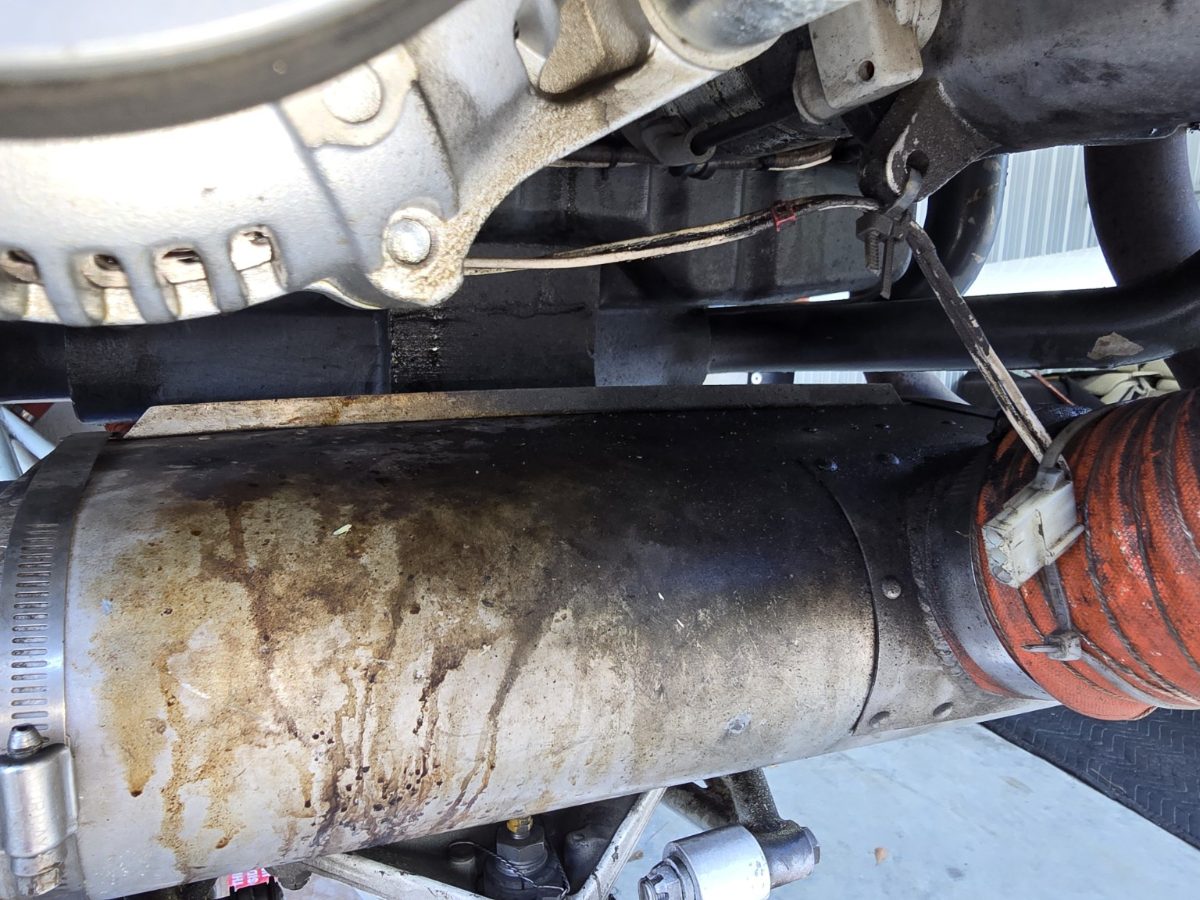
Oil staining and heat-baked deposits on the muffler shroud below Cylinders 1 and 2
Figure 8: Oil and heat-baked deposits on the muffler shroud below Cylinders 1 and 2, a potential smoke and fire hazard.

13. Additional maintenance-condition findings

Maintenance and airworthiness evaluation required

The six-year-old battery was being jump-started from a vehicle with automotive cables, and the right main wheel, tire and tube needed inspection after an owner-performed tire change.

Read the full finding

Observed/Reported: The installed aircraft battery is approximately six years old and no longer has sufficient capacity to start the engine. Automotive jumper cables are being used to start the aircraft from a vehicle. The landing-gear unsafe-warning-light housing and bulb are missing, the associated system requires operational testing, and the factory cylinder-head-temperature gauge is inoperative.

The right main tire was reported as having been replaced as pilot preventive maintenance. A substantial quantity of tire talc was observed on the ground and ramp after the work. The presence of talc alone does not establish the condition of the completed installation; however, the right main wheel, tire, and tube assembly should be inspected to verify proper tube positioning, tire alignment, inflation, wheel assembly, fastener torque, bearing condition, and required safetying.

Why it matters: A battery that cannot start the engine should be replaced and the starting and charging systems checked as appropriate. Vehicle jump-starting introduces operational and electrical risks if the equipment, polarity, voltage, and procedures are not correct. The missing warning-light components and inoperative required CHT indication must be corrected or otherwise resolved through approved data. The wheel and tire inspection should confirm that the assembly is safe for continued service.

Recommended actions and purchase assessment

Bottom line: the aircraft shouldn't be valued as having a verified healthy engine or cooling system based on the final compression readings alone. The buyer's prudent options were to require correction and satisfactory testing before closing, or to price in a substantial contingency for cylinder work, cooling-system restoration and the other documented items.

Recommended actions before purchase or further routine flight
  • Obtain the complete LoPresti STC package, installation drawings, Instructions for Continued Airworthiness, flight-manual supplement, and any required placards; perform a documented conformity inspection of the cowling, inlet rings, baffles, seals, cowl flap, induction ducting, oil-cooler ducting, and outlets.
  • Repair or replace distorted, undersized, deteriorated, or incorrectly oriented baffles/seals and the partially collapsed oil-cooler duct using approved data and eligible materials.
  • Verify that all inter-cylinder baffles and cylinder-fin passages are installed, clean, unobstructed, and correctly positioned.
  • Perform a differential compression test with leakage source recorded for each cylinder; conduct and photograph a complete borescope examination of piston crowns, cylinder walls, exhaust valves, intake valves, and valve-guide indications.
  • Cut open and inspect the oil filter; inspect the suction screen as applicable; document oil type, time in service, consumption history, and any metallic or carbonaceous contamination.
  • Clean the engine and belly, perform a controlled ground run, and reinspect for oil, fuel, exhaust, and induction leaks. Identify the sources of oil on Cylinders Nos. 1, 2, and 3 and the leakage through the threads of the No. 2 cylinder hold-down nut.
  • Identify the electronic ignition by manufacturer, model, software/configuration, and approval basis. Verify its base/static timing, manifold-pressure input, wiring, programmed advance schedule, operating limitations, and conformity with the applicable STC, Instructions for Continued Airworthiness, and Lycoming limitations. Evaluate recorded CHT during both base-timing/high-power operation and advance-enabled cruise operation.
  • Repair and restore the required factory CHT gauge to proper operation. Verify that the installed JPI engine monitor's approval basis and instrument markings do not represent it as a primary replacement unless supported by approved data. Calibrate or cross-check all CHT and oil-temperature indications.
  • After correction, conduct an instrumented operational test in accordance with approved procedures, recording ambient temperature, power setting, mixture, airspeed, cowl-flap position, oil temperature, and each available CHT. Establish that temperatures remain within limits with reasonable margin during ground operation, climb, and cruise.
  • Restore the missing landing-gear unsafe-warning-light bulb and housing, determine why they were removed, place the aircraft on jacks, and fully cycle and operationally test the landing gear, warning indications, microswitches, and emergency-extension system in accordance with applicable Piper service data.
  • Remove and inspect the muffler/shroud assembly, pressure-test or otherwise inspect the exhaust as specified by applicable data, and correct loose or worn attachments.
  • Perform a complete records review and current AD search for the airframe, engine, propeller, appliances, and installed STCs; generate an updated AD-compliance listing and reconcile undocumented alterations before purchase. Replace the failed battery and inspect the right main wheel, tire, and tube installation.
Full purchase assessment

The aircraft should not be valued as having a verified healthy engine or a validated cooling system on the strength of the final mid-70 compression readings alone. The reported prolonged high-CHT/high-oil-temperature operation has subjected the cylinders and rings to accelerated thermal aging. The programmed electronic-ignition advance can add combustion heat during cruise-type operation, while the observed cooling-air deficiencies reduce the engine's ability to remove that heat. The initially poor and non-repeatable compression, repeated crankshaft repositioning required to obtain higher readings, observed blow-by, dark oil, wet belly, and oil within the cylinders are collectively consistent with premature ring-sealing and cylinder deterioration. These conditions create a substantial risk of cylinder and broader engine work.

The prudent purchase position is to require correction and satisfactory testing before closing, or to price the aircraft with a substantial contingency for cylinder work, cooling-system restoration, exhaust work, landing-gear warning-system restoration, and correction of the documented maintenance and records discrepancies. The inoperative required factory CHT gauge, missing landing-gear unsafe-warning-light components, failed six-year-old battery, oil-filter safety-wire condition, wheel/tire inspection need, and absence of a current AD-compliance listing further increase the purchaser's airworthiness and economic exposure.

No conclusion is made here that the LoPresti STC design itself is defective. The report conclusion is that the aircraft, as observed and reported, did not demonstrate an adequately sealed and verified cooling-air system. Approval of a modification does not eliminate the need for continued conformity, maintenance, and proof that the installed system performs within engine and aircraft temperature limits.

Scope, limitations and technical basis

This report records conditions observed during a pre-purchase inspection and information reported by the owner/operator. It is not an annual inspection, conformity determination, engineering approval, or guarantee of future airworthiness. Disassembly and testing were limited to the access and procedures performed at the time. Approved LoPresti installation drawings, Instructions for Continued Airworthiness, flight-manual supplement, and complete aircraft records were not available for a line-by-line conformity determination when these notes were prepared.

Statements concerning prior maintenance are limited to observable aircraft condition and record quality. They do not establish who caused a condition or whether a particular person failed to perform a required task without comparison to the applicable inspection records, work scope, and approved data.

The cooling explanation in this report is consistent with FAA guidance that tightly cowled air-cooled engines use baffles to direct sufficient airflow for cooling, and with standard reciprocating-engine pressure-cooling principles. Final maintenance determinations must be made from the specific aircraft's approved Piper and LoPresti data, the Lycoming engine publications applicable to the installed engine model, and current FAA regulatory/airworthiness information.

  • Federal Aviation Administration, Airplane Flying Handbook, FAA-H-8083-3C, Chapter 2 (air-cooled engine cowling and baffle function).
  • FAA-approved LoPresti STC SA01319AT and associated approved installation/continued-airworthiness data applicable to the specific PA-28R model and serial number (to be obtained and verified).
  • Applicable Piper PA-28R maintenance/service manual and Lycoming operator/maintenance publications for the installed engine model (exact revisions to be entered after aircraft identification is confirmed).

Download the full report (PDF)

Scope varies by aircraft

The scope of an inspection varies with the aircraft, the available records and the work agreed with the buyer. Depending on the aircraft, it may include review of maintenance records, evaluation of engine and airframe condition, systems checks and selected operational tests.

What would an inspection like this cost for your airplane? It depends on the aircraft, the scope and the travel. See what goes into the cost and get a quote for your aircraft.

This sample demonstrates the report format. It describes one aircraft at one point in time; it doesn’t describe another aircraft or replace an inspection of the one you’re considering.

Bahan Aviation Services provides independent aircraft pre-purchase inspections nationwide, traveling to the aircraft and giving buyers documented findings to support an informed decision.

Talk directly with your inspector

Send the listing and available logbooks for a free preliminary review, or call to discuss a pre-purchase inspection or annual.

Call (281) 451-2163 Contact form